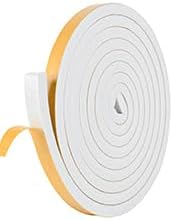
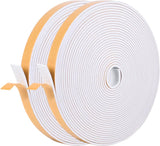
Kikerike Neoprene Foam Strip – Shared Wall Door Seal for a Quieter Work-from-Home Setup
Kikerike Neoprene Foam Strip – Shared Wall Door Seal for a Quieter Work-from-Home Setup
Couldn't load pickup availability
Why you'll love it
- Strong adhesive backing holds firm without nails or screws, making it a true no-tool DIY install
- High-density CR foam resists deformation over time, unlike cheap open-cell tapes that flatten and fail
- Customizable length and shape — cut with scissors to fit any gap exactly
- Wide temperature tolerance from -50°C to 150°C means it works in garages, cars, and exterior doors
- One roll solves many problems (sound, drafts, vibration, cushioning) instead of buying separate products
- Flame-retardant and corrosion-resistant material adds safety and longevity over rubber alternatives
Perfect for
- Sealing door and window gaps to block drafts, dust, and noise
- Weatherstripping entryways before winter or summer to lower energy bills
- Dampening vibration and rattling in car doors, trunks, and speaker cabinets
- Insulating electrical cabinets and enclosures from moisture and debris
- Cushioning drawer edges, tool grips, and sports equipment contact points
Frequently Asked Questions
Will this help me focus during remote work by reducing hallway noise?
Yes. Sealing the gap around your home office door is one of the highest-impact ways to block household noise, and the dense foam structure absorbs sound that would otherwise leak in during calls and deep work.
Can I use it to soundproof a small studio apartment for video calls?
It works well for studio apartments because the foam seals the most common leak points (door, window, and shared wall outlets) without taking up floor space, which is critical when every square foot counts.
Does it help stop echo and reverb in a home office with hard floors?
By sealing the door perimeter, you reduce the way sound leaks out of and bounces back into the room, which lowers echo and improves microphone clarity on calls.
Will the seal stay intact if I open and close the door many times a day?
The high-density CR foam is designed to rebound after repeated compression, so it holds its shape and seal through daily use without flattening at the contact points.
Is it strong enough for a sliding barn door used as a workspace divider?
Yes. The flexible profile conforms to the wider gap typical of sliding doors, and the strong adhesive backing keeps it in place as the door moves along the track.
Can I use this in a shared office space to give myself a quieter corner?
If you sit near a shared wall, doorway, or partition edge, applying the foam along the contact points can noticeably reduce the bleed of conversations and keyboard noise into your area.
Does it interfere with Wi-Fi or Bluetooth signals in a tech-heavy office?
No. Foam insulation does not block wireless signals, so your router, speakers, and devices will continue to perform normally.
Will it help me sleep better if I work late and need to wind down?
By sealing your bedroom door and windows, you reduce hallway, neighbor, and street noise, which supports a more restful environment after a long work day.
Is it better than buying a white noise machine for a quiet workspace?
A white noise machine masks sound, but this foam actually blocks it at the source. For a productivity-focused buyer, reducing the noise that enters the room is more effective than covering it up.
How does it compare to a full acoustic panel setup for a small office?
Acoustic panels treat sound inside a room, while this foam strips sound at the leak points. For a remote worker, sealing gaps first gives you the biggest gain for the lowest cost, and panels can be added later if needed.
Will my landlord mind if I install it in a rented apartment?
Most landlords accept peel-and-stick weather stripping because it improves the unit, and the adhesive is designed to be removed cleanly from standard painted surfaces when you move out.
Does it require any tools that might disturb my neighbors during install?
No. Installation is fully peel-and-stick with scissors-only cutting, so there is no drilling, hammering, or loud setup to worry about in a shared building.
Can it help with HVAC drafts that make my office too hot or cold during the day?
Yes. Sealing the gaps around doors and window AC units keeps conditioned air in and outside air out, which stabilizes the temperature of your workspace.
Will the adhesive hold on a metal door frame in a converted industrial office?
Yes. The pressure-sensitive adhesive bonds well to clean metal, wood, and painted frames as long as the surface is wiped down and dry before application.
Is one roll enough for a full home office setup including door and window?
A single 16.5 ft roll covers a standard door perimeter with enough left over for one window, making it a complete seal solution for a typical home office.
Does it help with the cold draft under a door during long work sessions near the floor?
Yes. Applied along the bottom or side gap of the door, it stops the cold air line that often sits at ankle height near exterior doors and window units.
How do I install the foam tape on a door or window?
Clean the surface with rubbing alcohol and let it dry completely. Measure the gap, cut the strip to length with scissors, peel off the backing, and press the foam firmly into place along the frame. Apply pressure for about 30 seconds to fully activate the adhesive.
How do I prepare the surface so the adhesive sticks properly?
Wipe the area with isopropyl alcohol to remove dust, oil, and old adhesive residue. Make sure the surface is completely dry and at least 10°C before applying. Avoid touching the adhesive side of the strip with your fingers during install.
Can the foam tape be removed without damaging the surface underneath?
Yes. Peel it back slowly at a low angle. Any light adhesive residue can be removed with a mild cleaner or adhesive remover. It is designed to come off cleanly from most painted, wood, metal, and glass surfaces.
Will it stick to painted, wood, metal, and glass surfaces?
Yes. The pressure-sensitive adhesive is engineered to bond to all of these common surfaces, including painted door frames, varnished wood window casings, anodized aluminum, and standard glass.
Does it work on uneven, warped, or curved frames?
Yes. The flexible foam compresses and conforms to irregular surfaces, which is one of its advantages over rigid seals. For very wide gaps, use a thicker profile; for narrow gaps, choose a thinner one.
What is included in the box when I order it?
Each order includes one roll of self-adhesive foam tape in the size you selected, with the protective adhesive liner on the back. You will need only scissors for installation; no other tools or accessories are required.
Is the foam tape safe for long-term indoor use?
Yes. The closed-cell neoprene foam is low-odor, does not off-gas, and is safe for continuous indoor use in bedrooms, nurseries, and home offices.
Will the foam lose its shape or stop sealing after a few months?
No. The high-density CR foam is designed to rebound after compression, so it keeps its seal far longer than cheap open-cell foam tapes that flatten and fail within weeks.
What is the difference between foam weather stripping and rubber weather stripping?
Foam weather stripping is softer, easier to install, and conforms better to irregular gaps. Rubber weather stripping is denser and longer-lasting on high-traffic surfaces, but it is harder to cut and install. Foam is generally the better choice for DIY home and auto use.