Duck Brand Foam Pipe Covers – Wellness Minded Pipe Wrap for Apartment Dwellers, Reduces Humidity and Mildew Risk Around Bathroom and Kitchen Cabinets
Duck Brand Foam Pipe Covers – Wellness Minded Pipe Wrap for Apartment Dwellers, Reduces Humidity and Mildew Risk Around Bathroom and Kitchen Cabinets
Couldn't load pickup availability
Why you'll love it
- Prevents costly water damage and emergency plumber calls from burst frozen pipes
- Self-sealing adhesive edge means no extra tape, glue, or zip ties required for installation
- Recovers energy costs by keeping hot water hot on its way to the faucet
- Made in the USA, appealing to buyers who prefer domestically manufactured goods
- Pre-slit design wraps cleanly around elbows and curved fittings where rigid foam tubes fail
- Safe up to 212°F, suitable for residential hot water lines and low-pressure heating loops
Perfect for
- Wrapping hot water supply lines to reduce standby heat loss and lower energy bills
- Insulating cold water pipes in humid summers to stop condensation drips and ceiling stains
- Protecting exposed pipes in unheated areas from freezing and bursting in winter
- Adding R-3.6 thermal barrier to short curved pipe runs behind washing machines or water heaters
- Retrofit insulation on 1/2" to 3/4" copper or PVC lines without tools
Product Information
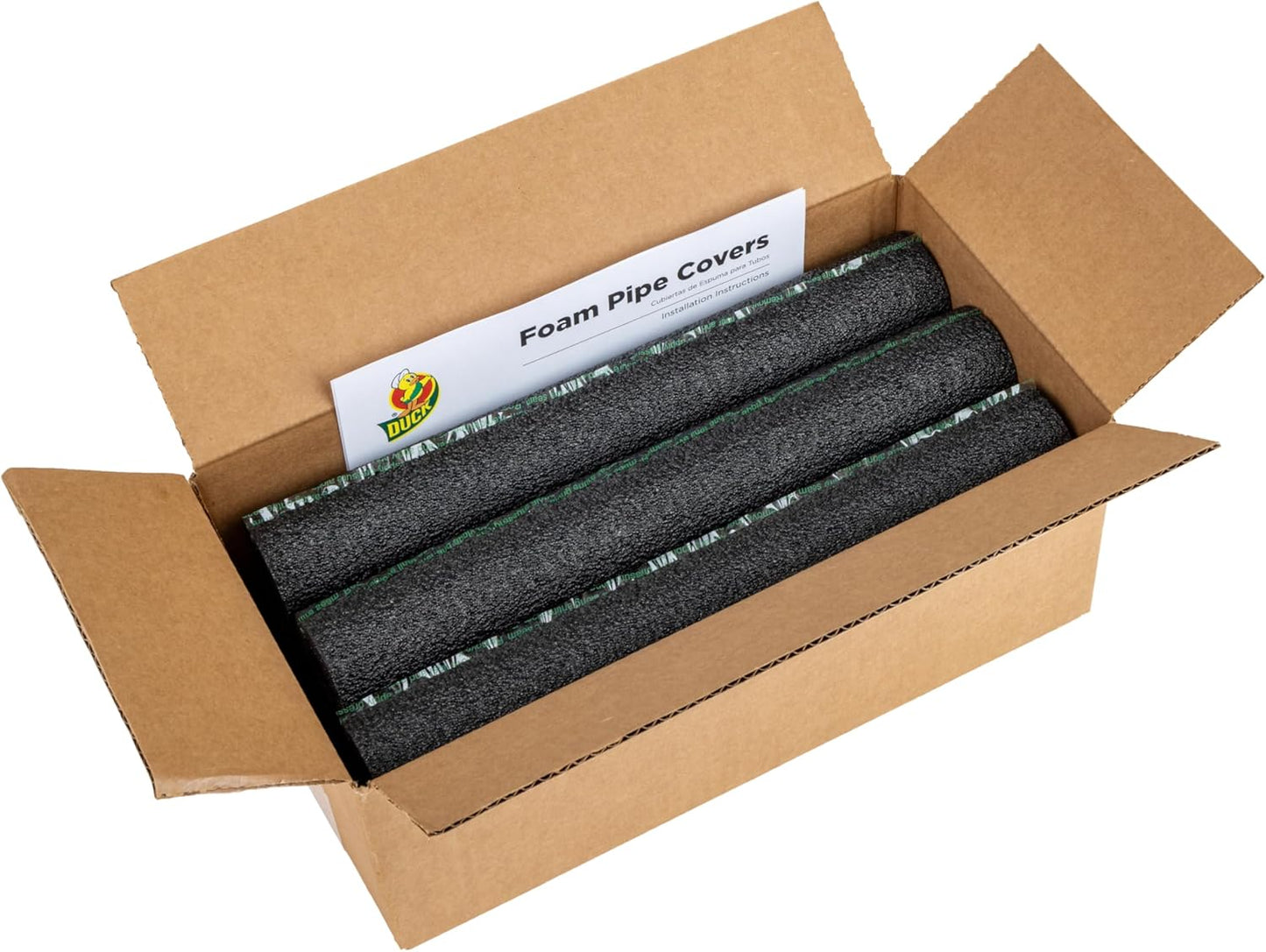
Duck Brand insulating foam pipe stick covers are great for insulating both hot and cold water pipes These foam pipe covers are pre-slit for easy opening and installation on curved pipes and the self sealing edges make it easy to secure Versatile foam pipe insulation helps prevent winter freezing and summer sweating of indoor water, air conditioning and HVAC pipes. Safe for temperatures up to 212 F. These pipe covers have an R Value of 3.6 and can fit 1/2" to 3/4" pipes Each foam pipe stick is 12" long for easy installation. 6 pipe sticks come in a pack for a total of 6 feet of pipe insulation MADE IN THE USA: This Duck Brand product is made in America
Insulating pipes can prevent energy loss helping you save on energy bills while also protecting your home from costly water damage due to frozen pipes. Duck Brand Foam Pipe Covers are great for insulating both hot and cold pipes, preventing them from winter freezing and summer sweating. The sticks are pre-slit for easy opening and installation on curved edges. Plus, the self-sealing edges make it easy to secure on your pipes. Use together with other Duck Brand weatherization products to make your home more comfortable and energy efficient all year long.
Frequently Asked Questions
Will this stop the cold-water pipe sweat that drips onto the floor of my bathroom cabinet and creates mildew?
Yes. The closed-cell foam keeps the cold pipe surface above the room's dew point, so humid bathroom air no longer condenses on the line. The drips and the mildew that follows them both go away.
Can wrapping my pipes help with the musty smell in a basement utility room that affects the whole floor?
Yes. Condensation on cold pipes is a primary moisture source in basements, and removing it cuts off the damp-surface conditions musty odors thrive in. Combined with normal ventilation, the air feels noticeably cleaner.
Will the foam help me avoid the ceiling stain that keeps returning above my upstairs bathroom?
Yes. The recurring stain is almost always condensation dripping off an uninsulated cold water line in the ceiling cavity. Insulating the pipe eliminates the drip and the stain stops growing.
Is this product safe to install in a home where someone has chemical sensitivities or respiratory concerns?
Yes. The foam is closed-cell polyethylene, which is inert, fiber-free, and does not off-gas once installed. It contains no formaldehyde binders and no volatile organic content of concern for chemically sensitive households.
Can I use this in a yoga room, meditation space, or bedroom closet where calm is the priority?
Yes. The foam eliminates the ticking, dripping, and creaking sounds that uninsulated pipes make as they heat and cool, which is one of the most common background-noise disruptors in otherwise quiet rooms.
Will this support my wind-down routine by removing the dripping sound from my bathroom cold-water line?
Yes. Insulating the cold line stops the slow drip onto the cabinet floor that many people hear at night. The bathroom becomes genuinely quiet, which supports a calmer end-of-day routine.
Does insulating hot water lines actually make my morning shower feel more like a self-care ritual?
Yes. The foam cuts standby heat loss, so water arrives at the fixture hotter and faster. You stop running the tap waiting for warmth, and the shower reaches the temperature you want sooner with less water waste.
Can this help in an apartment where I can't modify the walls but worry about mold from pipe condensation?
Yes. Wrapping the accessible pipes under the bathroom sink and kitchen cabinet is a renter-friendly fix that requires no wall work. It cuts the condensation moisture at the source and the mold risk drops with it.
How does foam pipe insulation compare to a bathroom exhaust fan upgrade for managing bathroom moisture?
They address different sources. The fan removes air moisture after it forms; foam prevents the pipe condensation that is often the largest single moisture source in the room. Used together they are the most effective combination, but the foam alone solves the pipe side on its own.
Compared to a whole-home dehumidifier, is foam pipe insulation a better wellness-focused fix for a basement?
A dehumidifier treats the symptom — high indoor humidity — and runs continuously at a cost. Foam pipe insulation treats one of the largest moisture sources directly, with no electricity and no operating cost. For a basement with sweating pipes, it is typically the more targeted fix.
How does this compare to antimicrobial pipe wraps that claim to kill mold on contact?
Antimicrobial wraps slow mold growth on the wrap itself but do not stop condensation from forming in the first place. Closed-cell foam keeps the pipe above dew point so no condensation forms, which removes the moisture mold needs to grow at all.
Will the foam help with the cold draft I feel near an exterior wall where pipes run through the cavity?
Indirectly, yes. Insulated pipes reduce the cold thermal bridge along the pipe path through the wall, and the cold-water line stops acting as a radiating cold surface in the room. Many homeowners notice the wall feels less cold to the touch near the wrapped pipes.
I care about wellbeing more than technical specs — will I actually feel a difference after installing this?
Most homeowners notice three things within the first week: the dripping stops, the bathroom cabinet stays dry, and the hot water at the far faucet arrives noticeably faster. Together those are the everyday wellness wins this product is designed to deliver.
How do I install Duck Brand Foam Pipe Covers on a straight run of pipe?
Measure the run, cut the 12-inch sticks to length with a utility knife, open the pre-slit, fit the foam around the pipe, peel the adhesive liner, and press the seam closed. Butt the next stick against the end of the first and repeat until the run is covered.
How do I handle an elbow or offset fitting where the tube doesn't bend naturally?
Open the clamshell slit fully, fit the foam around the outside of the bend, and let the slit spread slightly to follow the curve. For tight 90s, miter the end of one stick at 45 degrees on each side to make a clean corner joint, then seal the seam as usual.
Do I need any tools, tape, glue, or zip ties to complete the installation?
No. The only tool recommended is a utility knife and a straight edge for cutting the sticks to length. The integrated adhesive edge closes the seam; no tape, glue, wire, or zip ties are required.
Will these foam covers fit my 1/2-inch copper water lines?
Yes. The tubes are sized for standard 1/2-inch residential copper and will also fit 3/4-inch copper and most 1/2-inch PVC cold water lines. The pre-slit opening allows a small range of fit adjustment on either side of the nominal size.
Will this work on PVC drain lines as well as copper supply lines?
Yes, on the smaller PVC sizes. The foam fits standard 1/2-inch and 3/4-inch PVC. For larger PVC drain lines, you will need a larger-diameter insulation product; these sticks are not designed for 2-inch or larger drains.
What is included in the package and do I need to buy anything else?
Each package contains six 12-inch pre-slit foam sticks for 6 linear feet of coverage total, with the self-sealing adhesive strip already applied. You will need a utility knife and a straight edge for cutting; nothing else is required for a standard install.
Will the foam grow mold or hold moisture against the pipe over time?
No. The closed-cell foam does not absorb water and does not provide a food source for mold. It is the same material used in cooler lids and protective packaging, chosen specifically because it stays dry in humid conditions.
How long will the foam last once installed on residential pipes?
Indoor residential installations typically last 10+ years. The closed-cell foam is stable, the adhesive bond is long-term, and there are no moving parts or consumables to replace.
What is the difference between foam pipe insulation and heat tape or heat cable for freeze protection?
Foam is a passive thermal barrier that slows heat loss and keeps cold away from the pipe with no electricity required. Heat tape is an active electric heating element that warms the pipe using household current. Foam is the lower-cost, lower-maintenance, zero-energy option, and is the right first choice for most residential freeze prevention.